Thursday, October 12, 2006
Shaming & Blaming & Ridicule (of Truth)
Personal INSULTS are the "last resort" of an exhausted mind -- when confronted with undeniable Truth.

Wednesday, September 13, 2006
9/11 Economics ~ What if?
Week of 9/11, 2006 ~ five years after the events...
Let us never forget the devastating human cost of the 9/11 attacks. All too poignantly, those memories (impaled into our hearts and minds 5 years ago) were relived (and rehashed) through the medias (and in premier position) this week. There was no escaping total recall, nor the ongoing impact.
Hence, we marked the 5th anniversary of that terrible day.
While taking-on a certain distance from the human cost, the economic costs of 9/11 have also been staggering. But I've wondered, what would the world economy look like if September 11th, 2001 had never happened?
Those attacks changed our perspectives about violent death, and what was possible in the way of new "crimes against humanity". The world economy was altered in two distinct ways, Me Thinks...
First, there was significant, unthinkable, and immediate damage back in 2001. We responded with the closing of America's borders, a halt on international travel. Soon thereafter, the "CNN Effect" on consumer spending sent growth into a veritable nosedive (that ill-fated September)! That gloomy month contributed to one of the worst 3rd Quarters in years -- with U.S. gross domestic product declining 1.4 percent. In retrospect, it seems clear that the U.S. wouldn't have had an official recession that year (since there might have only been one quarter of negative GDP growth in 2001, the first).
By following that chain of events forward, the US Federal Reserve aggressively reduced interest rates to levels not seen since the 1950s and held them low for some time. As spending by businesses plummeted, housing demand was stimulated by the low interest rates, keeping the economy afloat. (Looking back, it seems likely that we might be talking less of a collapsing housing bubble today if 9/11 had never happened.)
Just as significant, has been the varied, yet intangible damage to the economy.
The attacks taught the world that the risk of becoming a victim to the ideologies of another person, group, or country was far higher than we believed. That realization has made market participants a great deal more risk averse. That increased risk aversion has driven up the prices of assets that are perceived to be safe and depressed those of assets that may be more exposed to a sharp decline if another terrorist attack occurs. In this way, intangible damage leads to visible symptoms.
Some examples...
Assets and prices? This has helped boost the price of gold and other commodities, as well as of government bonds. The yield on the 10- year U.S. Treasury, which closed at 4.77 percent on Sept. 8th 2006, is about three-quarters of a percentage point lower than in June 2001. Given that the economic-growth and inflation rates are both higher than they were back then, we might well expect interest rates today to be as much as a percentage point higher than they now are. Flight to safety because of fears of terrorism probably explains much of the difference. The avoidance of volatility is also seen in stock valuations. The price-to-earnings ratio of the Standard & Poor's 500 Index spent the first two years of this millennium ranging from 23 to 40.
Last week, that ratio was about 17. Again, it is likely that a good bit of that change is attributable to risk aversion that was heightened by 9/11. The index would have to rise 37 percent to reach the lowest P/E level in the two years before the terrorist attacks of 2001.
Middle East?
Equally significant may be the impact of the attacks on the economies of the Middle East. Many Middle East nations share a common trait -- their relative political oppression. Indeed, they rank among the least politically free countries in the world, according to the annual World Freedom survey conducted by various organizations that track the spread (or decline) of freedom throughout the world. The surveys rank countries by political and civil freedom on a scale of 1-to-7, with one being the most free and seven the least. For context, the average world rating for both measures of freedom is about 3, or "closer to free" than not.
Saudi Arabia (home to most of the September 11 hijackers), and Syria (a state-sponsor of terrorism), received a rating of 7 for both political and civil freedoms -- a distinction they share with only six other countries, including North Korea and Sudan. Is anyone surprised?
Freedom ranking of countries? According to the Index of Economic Freedom, these nations differ in economic freedom as well. Ranked on a scale from 1-to-5, with a lower score representing "greater freedom" -- half of the nations examined were freer than the world average, while half were less free. Iran, for example, received a score of 4.5, the second worst in the index -- while Jordan received 2.8, a score reflecting a freer economy than the world average of 2.98. By comparison, Hong Kong was ranked as the freest economy in the world with a score of 1.28, while the U.S. was tied for 8th at 1.84.
There is ample evidence that a "lack of freedom" undermines economic growth, and the miserable standard of living in most Muslim-dominated Middle Eastern countries can be attributed to their position in these rankings. Once again, that comes as no surprise (or shouldn't). Indeed, the International Monetary Fund recently released a careful analysis of the Arab growth deficit. Except for oil, things look very bad indeed.
Are some counties "immune" to acquiring Freedom? Compare the [above] findings with the rest of the world. The past few decades have seen an enormous spread of Freedom across the globe, from Asia to the former Soviet Union, and with Freedom has come striking improvement in economic well-being. The Middle East continues to be more or less immune (vulnerable) to these forces of Good, well being, and dare I say it... Democracy!
The decline of totalitarian regimes elsewhere in the world suggests that their existence is perilous at best.
The world's citizens prefer Freedom.
Osama bin Laden has doubtless, had a one-man, negative-effect on the spread of economic freedom. His radical agenda gave repressive regimes in the Middle East an excuse to tighten their grips on power, thwarting the spread of liberty that has brought prosperity to so many other regions of the world.
That leads to my second point.
Regardless of the damage Bin Laden inflicted on western economies with his heinous attacks on 9/11, the harm his network has done to the standard of living of the Muslims throughout the Middle East is far worse. If 9/11 had never occurred, we would all be better off ...but the biggest economic winners might have been the world's Muslims.
Is that not a bit of an irony? Me Thinks, yes.
Meanwhile, I'm really not prepared to begin reading the Qu'aran (Koran) in lieu of the Wall Street Journal and the NY Times just yet...
And so it is.
Let us never forget the devastating human cost of the 9/11 attacks. All too poignantly, those memories (impaled into our hearts and minds 5 years ago) were relived (and rehashed) through the medias (and in premier position) this week. There was no escaping total recall, nor the ongoing impact.
Hence, we marked the 5th anniversary of that terrible day.
While taking-on a certain distance from the human cost, the economic costs of 9/11 have also been staggering. But I've wondered, what would the world economy look like if September 11th, 2001 had never happened?
Those attacks changed our perspectives about violent death, and what was possible in the way of new "crimes against humanity". The world economy was altered in two distinct ways, Me Thinks...
First, there was significant, unthinkable, and immediate damage back in 2001. We responded with the closing of America's borders, a halt on international travel. Soon thereafter, the "CNN Effect" on consumer spending sent growth into a veritable nosedive (that ill-fated September)! That gloomy month contributed to one of the worst 3rd Quarters in years -- with U.S. gross domestic product declining 1.4 percent. In retrospect, it seems clear that the U.S. wouldn't have had an official recession that year (since there might have only been one quarter of negative GDP growth in 2001, the first).
By following that chain of events forward, the US Federal Reserve aggressively reduced interest rates to levels not seen since the 1950s and held them low for some time. As spending by businesses plummeted, housing demand was stimulated by the low interest rates, keeping the economy afloat. (Looking back, it seems likely that we might be talking less of a collapsing housing bubble today if 9/11 had never happened.)
Just as significant, has been the varied, yet intangible damage to the economy.
The attacks taught the world that the risk of becoming a victim to the ideologies of another person, group, or country was far higher than we believed. That realization has made market participants a great deal more risk averse. That increased risk aversion has driven up the prices of assets that are perceived to be safe and depressed those of assets that may be more exposed to a sharp decline if another terrorist attack occurs. In this way, intangible damage leads to visible symptoms.
Some examples...
Assets and prices? This has helped boost the price of gold and other commodities, as well as of government bonds. The yield on the 10- year U.S. Treasury, which closed at 4.77 percent on Sept. 8th 2006, is about three-quarters of a percentage point lower than in June 2001. Given that the economic-growth and inflation rates are both higher than they were back then, we might well expect interest rates today to be as much as a percentage point higher than they now are. Flight to safety because of fears of terrorism probably explains much of the difference. The avoidance of volatility is also seen in stock valuations. The price-to-earnings ratio of the Standard & Poor's 500 Index spent the first two years of this millennium ranging from 23 to 40.
Last week, that ratio was about 17. Again, it is likely that a good bit of that change is attributable to risk aversion that was heightened by 9/11. The index would have to rise 37 percent to reach the lowest P/E level in the two years before the terrorist attacks of 2001.
Middle East?
Equally significant may be the impact of the attacks on the economies of the Middle East. Many Middle East nations share a common trait -- their relative political oppression. Indeed, they rank among the least politically free countries in the world, according to the annual World Freedom survey conducted by various organizations that track the spread (or decline) of freedom throughout the world. The surveys rank countries by political and civil freedom on a scale of 1-to-7, with one being the most free and seven the least. For context, the average world rating for both measures of freedom is about 3, or "closer to free" than not.
Saudi Arabia (home to most of the September 11 hijackers), and Syria (a state-sponsor of terrorism), received a rating of 7 for both political and civil freedoms -- a distinction they share with only six other countries, including North Korea and Sudan. Is anyone surprised?
Freedom ranking of countries? According to the Index of Economic Freedom, these nations differ in economic freedom as well. Ranked on a scale from 1-to-5, with a lower score representing "greater freedom" -- half of the nations examined were freer than the world average, while half were less free. Iran, for example, received a score of 4.5, the second worst in the index -- while Jordan received 2.8, a score reflecting a freer economy than the world average of 2.98. By comparison, Hong Kong was ranked as the freest economy in the world with a score of 1.28, while the U.S. was tied for 8th at 1.84.
There is ample evidence that a "lack of freedom" undermines economic growth, and the miserable standard of living in most Muslim-dominated Middle Eastern countries can be attributed to their position in these rankings. Once again, that comes as no surprise (or shouldn't). Indeed, the International Monetary Fund recently released a careful analysis of the Arab growth deficit. Except for oil, things look very bad indeed.
Are some counties "immune" to acquiring Freedom? Compare the [above] findings with the rest of the world. The past few decades have seen an enormous spread of Freedom across the globe, from Asia to the former Soviet Union, and with Freedom has come striking improvement in economic well-being. The Middle East continues to be more or less immune (vulnerable) to these forces of Good, well being, and dare I say it... Democracy!
The decline of totalitarian regimes elsewhere in the world suggests that their existence is perilous at best.
The world's citizens prefer Freedom.
Osama bin Laden has doubtless, had a one-man, negative-effect on the spread of economic freedom. His radical agenda gave repressive regimes in the Middle East an excuse to tighten their grips on power, thwarting the spread of liberty that has brought prosperity to so many other regions of the world.
That leads to my second point.
Regardless of the damage Bin Laden inflicted on western economies with his heinous attacks on 9/11, the harm his network has done to the standard of living of the Muslims throughout the Middle East is far worse. If 9/11 had never occurred, we would all be better off ...but the biggest economic winners might have been the world's Muslims.
Is that not a bit of an irony? Me Thinks, yes.
Meanwhile, I'm really not prepared to begin reading the Qu'aran (Koran) in lieu of the Wall Street Journal and the NY Times just yet...
And so it is.
Wednesday, September 06, 2006
Ravioli, Ravioli, Ravioli...
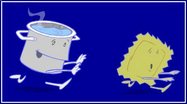 Some years ago, when I was living in Europe, I came to like making and eating "Ravioli" -- from out of a can, or made from scratch! It was pasta made "wonderful'a"! I like Ravioli! My kids like Ravioli! We were crazy about Ravioli! We liked making Ravioli ..."ra-ra-ra-Ravioli"! We're probably making Ravioli right now! We're making meat Ravioli, cheese Ravioli (and no Italian "Mama mia" is gonna show us how to make Ravioli)! Making Ravioli is a colorful addition to one's life, loves, and living. We even reminisce about eating Ravioli. My first Ravioli experience was exquisite! I suppose when thinking about it, making Ravioli is a learning experience similar to any. Just like reading a manual. There are steps which you need to follow but no advice you need to take. I knew about a few things. The dough needs to be nice and elastic, it needs to be very thin, and what else? Of course the pasta will be cooked al dente. And oh yes, and I learned this the hard way... "La Femme Nikita", played by Anne Parillaud (French film, directed by: Luc Besson, 1990) loved Ravioli! When do we get to go out to eat... Ravioli ?
Monday, September 04, 2006
The Art (of Love) Touch
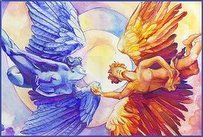
Touch transposes a warm feeling into our hearts...
(to be lost in the other's charms)
Touch sings a melody chanted like a mantra within one's thoughts.
(deep comfort, wrapped within the cocoon of four arms)
Touch can cause the heart to skip a beat...
(although the heart beats pure & fast)
Touch is what true love does "for" you (not "to").
(fingertips caress, as passions rise & last)
Touch is what I want to feel when I'm with you.
(to have you near, held tight, wanted most)
Touch me, and I fall inside of your warm embrace.
(the body aches to join with the other close)
(to be lost in the other's charms)
Touch sings a melody chanted like a mantra within one's thoughts.
(deep comfort, wrapped within the cocoon of four arms)
Touch can cause the heart to skip a beat...
(although the heart beats pure & fast)
Touch is what true love does "for" you (not "to").
(fingertips caress, as passions rise & last)
Touch is what I want to feel when I'm with you.
(to have you near, held tight, wanted most)
Touch me, and I fall inside of your warm embrace.
(the body aches to join with the other close)
Touch is a taste of tender lips.
(embraced to feel that sweetest nectar, refined)
Touch is what I feel whenever I'm thinking of you.
(while thoughts as soft as multicolors, drift gently into my mind)
Touch, is that explosive oneness, while waiting.
(forever messages conveyed through, best "wanting"...)
(embraced to feel that sweetest nectar, refined)
Touch is what I feel whenever I'm thinking of you.
(while thoughts as soft as multicolors, drift gently into my mind)
Touch, is that explosive oneness, while waiting.
(forever messages conveyed through, best "wanting"...)
And I can wait.
Tuesday, August 29, 2006
When Two Equals One
Given that, a = b
It ensues that, a² = a b
Hence also, a² - b² = ab - b²
Clearly, (a + b) (a - b) = 2b (a - b)
And, (a + b) (a - b) = b (a - b)
Divide both sides by (a - b), they cancel each other out...
Then, (a + b) = b
And since a = b, then logically (a + a) = a
Restated, 2a = a
Dividing by "a", 2 = a/a
Therefore 2 = 1
Where is the error? Is there an error? What is the error?
It ensues that, a² = a b
Hence also, a² - b² = ab - b²
Clearly, (a + b) (a - b) = 2b (a - b)
And, (a + b) (a - b) = b (a - b)
Divide both sides by (a - b), they cancel each other out...
Then, (a + b) = b
And since a = b, then logically (a + a) = a
Restated, 2a = a
Dividing by "a", 2 = a/a
Therefore 2 = 1
Where is the error? Is there an error? What is the error?
Sunday, August 27, 2006
Touch Me (Touched by You)

Were you here... I could measure the soft of thy skin with but one finger. Touch conveys thoughts as smooth as velvet ~ gently drifting... into the mind. Each stroke, reminiscent of becoming lovers ~ and our place in all time. Touched. We make memories... As ever skin will do. As ever touch will do.
My body aches to hold you close, My heart beats pure and fast. I embrace the feel of your sweet taste, To have you here again... at last! As ever I shall do. As ever you will do.
Fingers caress, as our passions rise... The love we make shines brightly, softly through our eyes. Deep within, each becomes lost in the other's charms, And the place my heart desires is the comfort of your arms. As ever we could do. As ever we should do.
Touch me, remind me of who I want to be. Touch me, remind me of who I can be. Touch me, remind me of who I am. The matching of your hand in mine comforts the Spirit, dear (wo)man. As ever Spirits should do. As ever our Love will do.
The Rose as Art?
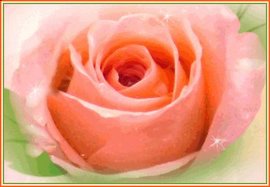
Poetry is the written evidence of life. If our life is burning well, poetry is the flame, not the ash. Poetry is a mans' rebellion against being what he is not. Poetry surrounds us everywhere. But placing it on paper is (alas) not so easy as the reading of it. Poetry is the music of one's soul ~ above all, the symphony of great and feeling souls. Poetry is the art of substantiating shadows. I do not create poetry, I create myself. For the reader, the poems are but one pathway towards me...
-ooOoo-
The Rose as Art
In my hand I bear a rose, soft and red, single yet whole.
In a field of flowers I stand, beneath skies of vivid hues.
Sweet air I breathe, I breathe again.
Embraced I am by waves of color, by waves Of light.
My eyes behold In all its beauty, a lone blossom 'cross the field.
A splash of lips, amid endless seas of tears.
Within my mind Is born a thought, made fertile by desire.
Forsake but which? Partake of which?
This rose I bear? Or that which tempts?
I fear that should I forsake this rose, so rare, so fine.
For another I'd find Its petals frayed, stained, withered and dry.
In a field of flowers I stand, beneath skies of vivid hues.
Sweet air I breathe, I breathe again.
Embraced I am by waves of color, by waves Of light.
My eyes behold In all its beauty, a lone blossom 'cross the field.
A splash of lips, amid endless seas of tears.
Within my mind Is born a thought, made fertile by desire.
Forsake but which? Partake of which?
This rose I bear? Or that which tempts?
I fear that should I forsake this rose, so rare, so fine.
For another I'd find Its petals frayed, stained, withered and dry.
Saturday, August 26, 2006
9Lives@ShortTime2Live-Long2StayDead.Com
Often, history reminds us of just how beautiful the saga of our universal humanity can be. The distant past is an ancient story of love ...and it is alive and well (love still transforms everything it touches). Sometimes that story is not quite so pleasant. And it forces us to face cultural baggage that we’d rather leave stored away in the basement of human experience...
For example, examine these facts about: Israel & Jerusalem.
1. Israel became a state in 1312 BC (2 millennia before Islam).
2. Arab refugees from Israel began calling themselves "Palestinians" in 1967, two decades after (modern) Iraeli statehood.
3. After conquering the land in 1272 BC, Jews ruled it for a thousand years and maintained a continuous presence there for 3,300 years.
4. The only Arab rule following conquest in 633 AD lasted just 22 years.
5. For over 3,300 years, Jerusalem was the Jewish capital. It was never the capital of any Arab or Muslim entity. Even under Jordanian rule, (East) Jerusalem was not made the capital, and no Arab leader came to visit it.
6. Jerusalem is mentioned over 700 times in the Bible, but is not mentioned at all in the Qur'an (Koran).
7. King David founded Jerusalem. (Mohammed never set foot there.)
8. Jews pray facing Jerusalem; Muslims face Mecca. If they are between the two cities, Muslims pray facing Mecca (backs turned, with respect to Jerusalem).
9. In 1948, Arab leaders urged their people to leave, promising to cleanse the land of Jewish presence, and 68% of them fled (without laying eyes on an Israeli soldier).
10. Virtually the entire Jewish populations of Muslim countries has fled (as the result of violence targeted at them).
11. Some 630,000 Arabs left Israel in 1948 -- while close to a million Jews were forced to leave the Muslim countries.
12. In spite of the vast territories "at their disposal", Arab refugess were deliberately prevented from being assimilated into their host countries. Of 100 million refugees following World War II, they are the only group to have never integrated to join their co-religionists. Most of the Jewish refugees from Europe and Arab lands were settled in Israel (a country no larger than New Jersey).
13. There are 22 Muslim countries (not counting Palestine). There is only one Jewish state.
14. Arabs started all of the wars against Israel and lost (or were losing), every one of them.
15. The Fatah and Hamas constitutions still call for the destruction of Israel.
16. Israel ceded most of the West Bank and all of Gaza to the Palestinian authority, and even provided it with arms.
17. During the Jordanian occupation, Jewish holy sites were vandalized and were off limits to Jews.
18. Under Israeli rule, all Muslim and Christian holy sites are accessible to all faiths.
19. Out of 175 United Nations Security Council resolutions up to 1990, 97 were against Israel; out of 690 general assembly resolutions, 429 were against Israel.
20. The U.N. remained silent when the Jordanians destroyed 58 synagogues in the old city of Jerusalem. It remained silent while Jordan systematically desecrated the ancient Jewish cemetery on the Mount of Olives, and it remained silent when Jordan enforced "apartheid-style" laws, preventing Jews from having access to the Temple Mount and Western Wall.
For example, examine these facts about: Israel & Jerusalem.
1. Israel became a state in 1312 BC (2 millennia before Islam).
2. Arab refugees from Israel began calling themselves "Palestinians" in 1967, two decades after (modern) Iraeli statehood.
3. After conquering the land in 1272 BC, Jews ruled it for a thousand years and maintained a continuous presence there for 3,300 years.
4. The only Arab rule following conquest in 633 AD lasted just 22 years.
5. For over 3,300 years, Jerusalem was the Jewish capital. It was never the capital of any Arab or Muslim entity. Even under Jordanian rule, (East) Jerusalem was not made the capital, and no Arab leader came to visit it.
6. Jerusalem is mentioned over 700 times in the Bible, but is not mentioned at all in the Qur'an (Koran).
7. King David founded Jerusalem. (Mohammed never set foot there.)
8. Jews pray facing Jerusalem; Muslims face Mecca. If they are between the two cities, Muslims pray facing Mecca (backs turned, with respect to Jerusalem).
9. In 1948, Arab leaders urged their people to leave, promising to cleanse the land of Jewish presence, and 68% of them fled (without laying eyes on an Israeli soldier).
10. Virtually the entire Jewish populations of Muslim countries has fled (as the result of violence targeted at them).
11. Some 630,000 Arabs left Israel in 1948 -- while close to a million Jews were forced to leave the Muslim countries.
12. In spite of the vast territories "at their disposal", Arab refugess were deliberately prevented from being assimilated into their host countries. Of 100 million refugees following World War II, they are the only group to have never integrated to join their co-religionists. Most of the Jewish refugees from Europe and Arab lands were settled in Israel (a country no larger than New Jersey).
13. There are 22 Muslim countries (not counting Palestine). There is only one Jewish state.
14. Arabs started all of the wars against Israel and lost (or were losing), every one of them.
15. The Fatah and Hamas constitutions still call for the destruction of Israel.
16. Israel ceded most of the West Bank and all of Gaza to the Palestinian authority, and even provided it with arms.
17. During the Jordanian occupation, Jewish holy sites were vandalized and were off limits to Jews.
18. Under Israeli rule, all Muslim and Christian holy sites are accessible to all faiths.
19. Out of 175 United Nations Security Council resolutions up to 1990, 97 were against Israel; out of 690 general assembly resolutions, 429 were against Israel.
20. The U.N. remained silent when the Jordanians destroyed 58 synagogues in the old city of Jerusalem. It remained silent while Jordan systematically desecrated the ancient Jewish cemetery on the Mount of Olives, and it remained silent when Jordan enforced "apartheid-style" laws, preventing Jews from having access to the Temple Mount and Western Wall.
There are only 2 things that I hate In this World:
"People who are intolerant of other cultures, and the French..."
Ferchriztsakez!
Ferchriztsakez!
Tuesday, August 15, 2006
Lexophiles "do it" with Letters!
1. A bicycle can't stand alone; it is two tired.
2. A will is a dead giveaway.
3. Time flies like an arrow; fruit flies like a banana.
4. A backward poet writes in verse.
5. Democracy = your vote counts; Feudalism = your Count votes.
6. A chicken crossing the road: poultry in motion.
7. If you don't pay your exorcist you can get repossessed.
8. With her marriage she got a new name and a dress.
9. Piano fell down a mine, resulted in A-flat minor.
10. When a clock is hungry it goes back four seconds.
11. The guy who fell onto an upholstery machine was fully recovered.
12. Exploded French kitchen floor? Linoleum Blownapart.
13. You are stuck with your debt if you can't budge it.
14. Local Area Network in Australia: The LAN down under.
15. He broke into song because he couldn't find the key.
16. A calendar's days are numbered.
17. A lot of money is tainted: 'Taint yours, and 'taint mine.
18. A boiled egg is hard to beat.
19. He had a photographic memory which was never developed.
20. A plateau is a high form of flattery.
21. Short fortuneteller escaped from prison? A small medium at large.
22. Get too big for your britches = be exposed in the end.
23. When you've seen one shopping center you've seen a mall.
24. If you jump off a Paris bridge, you are in Seine.
25. Seing her first gray hair, she thought she'd dye.
26. Bakers trade bread recipes on a knead to know basis.
27. Santa's helpers are subordinate clauses.
28. Acupuncture: a jab well done.
29. Marathon runners with bad shoes suffer the agony of de feet.
30. A president of a democracy is a man who is always ready, willing, and able to lay down your life for his country.
2. A will is a dead giveaway.
3. Time flies like an arrow; fruit flies like a banana.
4. A backward poet writes in verse.
5. Democracy = your vote counts; Feudalism = your Count votes.
6. A chicken crossing the road: poultry in motion.
7. If you don't pay your exorcist you can get repossessed.
8. With her marriage she got a new name and a dress.
9. Piano fell down a mine, resulted in A-flat minor.
10. When a clock is hungry it goes back four seconds.
11. The guy who fell onto an upholstery machine was fully recovered.
12. Exploded French kitchen floor? Linoleum Blownapart.
13. You are stuck with your debt if you can't budge it.
14. Local Area Network in Australia: The LAN down under.
15. He broke into song because he couldn't find the key.
16. A calendar's days are numbered.
17. A lot of money is tainted: 'Taint yours, and 'taint mine.
18. A boiled egg is hard to beat.
19. He had a photographic memory which was never developed.
20. A plateau is a high form of flattery.
21. Short fortuneteller escaped from prison? A small medium at large.
22. Get too big for your britches = be exposed in the end.
23. When you've seen one shopping center you've seen a mall.
24. If you jump off a Paris bridge, you are in Seine.
25. Seing her first gray hair, she thought she'd dye.
26. Bakers trade bread recipes on a knead to know basis.
27. Santa's helpers are subordinate clauses.
28. Acupuncture: a jab well done.
29. Marathon runners with bad shoes suffer the agony of de feet.
30. A president of a democracy is a man who is always ready, willing, and able to lay down your life for his country.
Friday, August 11, 2006
In the time of Australopithecines...
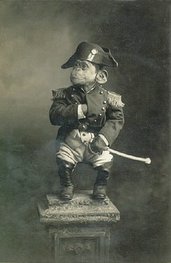
In the time of Australopithecines... I was still a monkey (a chimp I think, not a chump)...
"Robert! I don't care if you do think that you're related to Napoleon... Get your hand out of my blouse!"
Australopithecines are a genus of extinct hominids that lived in eastern Africa from about 4.2 Ma until about 1 Ma. Some anthropologists believe that some of the australopithecine species are directly ancestral to humans, however others hold they are a "side-branch" of the line that led to humans, and not direct human ancestors. I rather look like one those fellows, me thinks.
There are a variety of accepted taxonomic schemes for the australopithecines, however the four most commonly accepted species are Australopithecus afarensis, Australopithecus africanus, Australopithecus robustus, and Australopithecus boisei.
A. robustus and A. boisei are larger boned and more "robust" than A. afarensis & A. africanus, which are termed "gracile." The smaller gracile forms Australopithecus africanus and Australopithecus afarensis (the species which includes the famous fossil "Lucy") are typically thought to be the most closely related to humans. Studies have found that Australopithecus africanus (very similar to Australopithecus afarensis), the australopithecine species often thought to be the most closely related to humans, had a body shape more similar to modern apes than to members of the genus Homo.
Australopithecines stood about 1-1.5 m in height and had relatively small brains typically measuring between 370 and 515 cm3 (cc) -- only slightly larger than the brain of a chimpanzee.
The australopithecine mode of locomotion has been a point of controversy, usually centered around the shape of australopithecine pelvis and knee bones. Early studies believed the australopithecine pelvis was a clear-cut precursor to Homo with human-like bipedality, while later studies of australopithecine locomotion found it to be different from modern apes, but also very different from humans -- a distinct mode of locomotion. The most common consensus is that forms of australopithecines were adapted for both tree-climbing and at least semi-upright, if not fully upright walking, having a mode of locomotion different from all extant primates, including humans and modern apes."
"Cogito, ergo sum" I think, therefore I am?
And so it was...
I remember those days, like it was (well) yesterday...
Wednesday, August 09, 2006
Precious Loved
Carried with every Breath escaping mine Lips,
There is a Sweet thought of Thee.
And every Heartbeat,
Brings me precious Life and...
Caresses a new Memory made of We.
For each Tear shed due to Loss,
I would cry each another time Ov'r.
Because every Moment & Memory
That is being Shared & Made with You,
Is worth every Tear Lost, For'ver.
There is a Sweet thought of Thee.
And every Heartbeat,
Brings me precious Life and...
Caresses a new Memory made of We.
For each Tear shed due to Loss,
I would cry each another time Ov'r.
Because every Moment & Memory
That is being Shared & Made with You,
Is worth every Tear Lost, For'ver.
Tuesday, August 08, 2006
(peace) VIOLENCE ~ (war) VIOLENCE
terrorist (ter' or ist), n 1. A person who commits violence in pursuit of political goals we oppose.
hero (hē' rō) n 1. A person who commits violence in pursuit of political goals we favor.
hero (hē' rō) n 1. A person who commits violence in pursuit of political goals we favor.
Wonderous Hugs
Just wonderous what a hug can do!
A hug can cheer you when pink turns to blue.
A hug can say, "I love you so!"...
Or, "So sad to see you go."
A hug is,"welcome back again!"
And, "Great to see you, where've you been?"
A hug can soothe a lot of pain,
Or bring forth rainbows after the rain.
The hug! There's just no doubt about it,
We scarcely could survive without it.
A hug delights and warms and charms,
'Tis why God gave new love four arms!
Hugs are great for Dads and Mothers.
So sweet for sisters, just swell for brothers.
And chances are some favorite Aunts.
Love them more than their potted plants.
Kittens crave 'em! Puppies love 'em!
Heads of State are not above them.
A hug can break the language barrier.
And make the dullest day seem that much merrier.
No need to fret about having a store of them,
The more you give... the more there are of them!
So, reach out those arms without delay,
And give someone you love, a hug today!
Sunday, July 30, 2006
As spirit gently weeps...
This troubled World must be a constant source of tears for the Creator.
Me Thinks
Me Thinks
Tuesday, June 27, 2006
Buffet Billions
It was Andrew Carnegie who said, "The man who dies rich, dies disgraced." When the steel tycoon retired, he set up public libraries across the country and gave away $350 million (an enormous fortune by the standards of wealth 100 years ago). Give now, die later?
Thank you on behalf of all humanity, Mr. Warren Edward Buffet!
Another "Good friend" leading the way, Me Thinks.
Thank you on behalf of all humanity, Mr. Warren Edward Buffet!
Another "Good friend" leading the way, Me Thinks.
Sunday, June 25, 2006
Friday, June 23, 2006
The Speaking of Truth to Power
The time-honored role of the Thinker, is to Speak Truth to Power.
We could create a group of favorite, thinking saints. They are all around us. Many of us take them too much for granted and even bask in reflected glory because of the work that they do. Some are spiritually enlightened -- while quite a few more are not. But it doesn't matter. They do Good work, the work of Good. Or at least, after the Thinking is over or when history gives Good works credibility -- we all can claim it as Good and Decent. These people are the ones who work as loyal friends. They are intelligent, resourceful, patient, and wise. They may be found in modest places doing routine work. They dig into facts. They try to understand. They study and research, they walk the halls of Power. They go out and live with the people, they go anywhere in the world, modestly. They bind wounds, they feed the hungry, they teach, they excavate foundations, and they build shelter. And when it is necessary (and if they are qualified) they put down their tools, and look authority in the eye and Speak Truth to Power.
One does not need to describe their work, for we all know it. We can celebrate the balance in these saints. They are spoken of as naive, idealistic, do-gooders, and innocent doves. But we can believe they also have the wisdom of the serpent. They are spoken of with a touch of scorn as being "establishment" types -- too concerned with hierarchy and system, but we can believe that the work they do and the testimony they give, wears the ring of Truth. They live with and witness to the Good values in a down-to-earth, practical way.
They are also objected to as being too radical, too revolutionary, too pushy. They are -- for some. But not for we.
Love the way that they receive unfavorable judgment from both sides yet continue to Speak Truth to Power.
Such Good friends do die -- and once so, each ending will be an insignificant event -- barely a whimper in the scope of all things, begun and ended. But if this human experiment continues -- if this particular experience of Grace, Good, and Godliness evolves into something with increasing potential for life; if we don't destroy ourselves and our splendid planet -- it will be because more and more people will gradually believe, and behave, like the very best of mankind. They will gradually understand and commit themselves to live to, and by Higher values.
Calling ourselves by a label-name is not important.
What matters is how we live. And some of those "Good friends" are showing the way.
Me Thinks.
We could create a group of favorite, thinking saints. They are all around us. Many of us take them too much for granted and even bask in reflected glory because of the work that they do. Some are spiritually enlightened -- while quite a few more are not. But it doesn't matter. They do Good work, the work of Good. Or at least, after the Thinking is over or when history gives Good works credibility -- we all can claim it as Good and Decent. These people are the ones who work as loyal friends. They are intelligent, resourceful, patient, and wise. They may be found in modest places doing routine work. They dig into facts. They try to understand. They study and research, they walk the halls of Power. They go out and live with the people, they go anywhere in the world, modestly. They bind wounds, they feed the hungry, they teach, they excavate foundations, and they build shelter. And when it is necessary (and if they are qualified) they put down their tools, and look authority in the eye and Speak Truth to Power.
One does not need to describe their work, for we all know it. We can celebrate the balance in these saints. They are spoken of as naive, idealistic, do-gooders, and innocent doves. But we can believe they also have the wisdom of the serpent. They are spoken of with a touch of scorn as being "establishment" types -- too concerned with hierarchy and system, but we can believe that the work they do and the testimony they give, wears the ring of Truth. They live with and witness to the Good values in a down-to-earth, practical way.
They are also objected to as being too radical, too revolutionary, too pushy. They are -- for some. But not for we.
Love the way that they receive unfavorable judgment from both sides yet continue to Speak Truth to Power.
Such Good friends do die -- and once so, each ending will be an insignificant event -- barely a whimper in the scope of all things, begun and ended. But if this human experiment continues -- if this particular experience of Grace, Good, and Godliness evolves into something with increasing potential for life; if we don't destroy ourselves and our splendid planet -- it will be because more and more people will gradually believe, and behave, like the very best of mankind. They will gradually understand and commit themselves to live to, and by Higher values.
Calling ourselves by a label-name is not important.
What matters is how we live. And some of those "Good friends" are showing the way.
Me Thinks.
Sunday, June 04, 2006
Billions & Billions
Our galaxy, the "Milky Way" would take 200,000 years to cross -- traveling at the speed of light. It is known to contain about 200 Billion stars. Approximately 125 Billion galaxies are presently known to Science... that adds-up to about 25 Sextillion stars (25 followed by 21 zeros).
The inner workings of the human brain is the make-up of what we call "human nature". Amazingly, it has been calculated that the number of permutations (of possible connections between the synapses within a single mind) gives rise to a larger number.
"We are starstuff", "We are one species", "History is full of people who out of fear, or ignorance, or lust for power have destroyed knowledge of immeasurable value which truly belongs to all of us. We must not let it happen again." - Dr. Carl Sagan
In his Memory.
The inner workings of the human brain is the make-up of what we call "human nature". Amazingly, it has been calculated that the number of permutations (of possible connections between the synapses within a single mind) gives rise to a larger number.
"We are starstuff", "We are one species", "History is full of people who out of fear, or ignorance, or lust for power have destroyed knowledge of immeasurable value which truly belongs to all of us. We must not let it happen again." - Dr. Carl Sagan
In his Memory.
Subscribe to:
Posts (Atom)
+framed+%26+cropped.jpg)

 Posts
Posts


