Showing posts with label Anthropology. Show all posts
Showing posts with label Anthropology. Show all posts
Sunday, October 18, 2009

Friday, September 18, 2009
Living ONE HUNDRED years...
Today, mother began her 100th year of life (her 99th birthday), thus 99 years of living are behind her...
So, what are the odds of living to 100?
Mankind has come a long way. In the recent past, the odds of becoming a centenarian were about 1-in-20 million, but today those odds can be as great as: 1-in-50. A world fact: in developed countries - girls, who were the first born, to caucasian mothers, aged to 25 years (or younger) are the most likely to live to 100...
Here's an approximate summary of the progression of global (historical) Average Life Expectancy:
Stone Age = 20 years
Bronze Age = 18
Early Rome = 28
Medieval Times = 33
End of 19th Century = 37
Early 20th Century = 50
1940's = 65
Present (circa 2009) = 77-81 years.
Quite naturally, the major factor in determining life expectancy is always, Genetics.
But other factors well within a person's control will also have an influence. It has a lot to do with Common Sense and the maintenance of a healthy lifestyle - by keeping fit; good diet; conscientious hygiene; the preservation of balanced mental health; and stress management. It's a complex matrix and difficult to quantify just how much each of those play a part. What is certain, is that substance abuse shortens one's life dramatically (smoking, for example has a very significant negative impact because of the inreased risk of both heart failure and cancer).
A truism?
By the time an individual arrives at 90, he or she has gotten past a lot of the things that have already killed most of their contemporaries. It's an irony, but those statistics may become rather irrelevant in the next 20-30 years - as medical technologies advance (including genetic engineering, stem-cell therapy, bionics, nanotechnology, and rejuvenation therapy). Indeed, the human lifespan could be pushed out to 150, 200, 300 or more years (assuming you can afford the price tag).
I for one, would love to live to 100!
What an achievement to have lived for an entire century! And to have witnessed so many varied world events, and seen so many innovations come to be, or pass into obsolesence.
Yes, I would love to live to 100 (provided that I don't become a burden for my loved ones), and provided that I still have "all my marbles". I think that living to 100 would be marvellous!
By the way, my (Me Thinks) calculated life expectancy is 98!
Mother has always said, "I shall grow old, gracefully." To that, I would add, "A great life is not to be counted as the number of years we survive, rather - it's all about HOW we live them." I cannot recall ever seeing her angry, nor hearing her pronounce a foul word, or saying anything unpleasant about another person... She knows inner calm. She is also the most "other-centered" and genuinely "giving" and loving person I've even known.
May EVERYONE "love to 100" and live to set an example for others ...as my mother has done for almost a CENTURY.
Happy Birthday, Mom!
P.S. Our "record holder", was one of mother's STREMMEL relatives - a gal who lived to the ripe old age of, 105. Another, reached 103. Two of her sisters made it to 94 and 92. Mom was her mother's 5th-born child - when Mary was 37.
So, what are the odds of living to 100?
Mankind has come a long way. In the recent past, the odds of becoming a centenarian were about 1-in-20 million, but today those odds can be as great as: 1-in-50. A world fact: in developed countries - girls, who were the first born, to caucasian mothers, aged to 25 years (or younger) are the most likely to live to 100...
Here's an approximate summary of the progression of global (historical) Average Life Expectancy:
Stone Age = 20 years
Bronze Age = 18
Early Rome = 28
Medieval Times = 33
End of 19th Century = 37
Early 20th Century = 50
1940's = 65
Present (circa 2009) = 77-81 years.
Quite naturally, the major factor in determining life expectancy is always, Genetics.
But other factors well within a person's control will also have an influence. It has a lot to do with Common Sense and the maintenance of a healthy lifestyle - by keeping fit; good diet; conscientious hygiene; the preservation of balanced mental health; and stress management. It's a complex matrix and difficult to quantify just how much each of those play a part. What is certain, is that substance abuse shortens one's life dramatically (smoking, for example has a very significant negative impact because of the inreased risk of both heart failure and cancer).
A truism?
By the time an individual arrives at 90, he or she has gotten past a lot of the things that have already killed most of their contemporaries. It's an irony, but those statistics may become rather irrelevant in the next 20-30 years - as medical technologies advance (including genetic engineering, stem-cell therapy, bionics, nanotechnology, and rejuvenation therapy). Indeed, the human lifespan could be pushed out to 150, 200, 300 or more years (assuming you can afford the price tag).
I for one, would love to live to 100!
What an achievement to have lived for an entire century! And to have witnessed so many varied world events, and seen so many innovations come to be, or pass into obsolesence.
Yes, I would love to live to 100 (provided that I don't become a burden for my loved ones), and provided that I still have "all my marbles". I think that living to 100 would be marvellous!
By the way, my (Me Thinks) calculated life expectancy is 98!
Mother has always said, "I shall grow old, gracefully." To that, I would add, "A great life is not to be counted as the number of years we survive, rather - it's all about HOW we live them." I cannot recall ever seeing her angry, nor hearing her pronounce a foul word, or saying anything unpleasant about another person... She knows inner calm. She is also the most "other-centered" and genuinely "giving" and loving person I've even known.
May EVERYONE "love to 100" and live to set an example for others ...as my mother has done for almost a CENTURY.
Happy Birthday, Mom!
P.S. Our "record holder", was one of mother's STREMMEL relatives - a gal who lived to the ripe old age of, 105. Another, reached 103. Two of her sisters made it to 94 and 92. Mom was her mother's 5th-born child - when Mary was 37.
Thursday, April 30, 2009
The genetics of death: H1N1
The W.H.O. (World Health Organization) escalated the ongoing pandemic to a LEVEL 5 alert status, just yesterday (in an attempt at containment).
"Influenza A virus subtype H1N1", also known as "A(H1N1)", or simply "H1N1" - is a subtype of influenza virus A, and the most common cause of influenza in humans.
Discussion: In each time and each place, mankind has always sought to avoid disease. Historically, we've tried to limit the diffusion of diseases.
Surely, I am not alone to have taken notice of the fact that ALL of the deaths attributed to H1N1 (to date) have occurred in persons of Hispano American origin.
Let us also take note of the ethnological fact, that a very large percentage of the human populations alive today (from the Hispano American region)... is genetically speaking, descended from the aboriginal peoples who lived in isolation (from the balance of planetary populations) for at least 12,000 years, and possibly longer...
Genetic studies conducted by the NATIONAL GEOGRAPHIC SOCIETY have produced "genographic" mappings which describe the genetic-geographic origins of the peoples of the world (based upon DNA samples obtained from humans, all over the planet). Their statistical results connect (and disconnect) the "families" of the Planet, and span a sea of time...
It is clear, that all of Mankind has ties to the most ancient of the "Out of Africa" genealogies. Since anthropological times, the descendants of those "men" have bound all humans alive today to a common ancestry. But that same expanse of time served to produce the divergences of race, and the geographic isolation of entire populations. Both have fostered the evolution of immunities (and vulnerability) to specific types of disease.
Could it not be, that the H1N1 victims (Mexican descendants of ancient American peoples), have an inherent genetic predisposition (vulnerability) that other genetic groups may not share (carry)?
Are the "purest" aboriginal, Hispano Americans alive today, not part of a remnant population - the result of the varied geographic isolations of time? And does not such an inheritance, make them who they are today (from an immunology perspective)? And perhaps, particularly vulnerable?
Time will tell, and history is a wondrous teacher.
As the first Europeans arrived in meso-America (during the XV, XVI, XVII, and XVIII centuries), they also introduced an entire array of communicable diseases. Some of those ailments ultimately ravaged the indigenous aboriginal populations. Indeed, entire cultures were virtually obliterated.
Is it not true that disease became the most efficacious "Conquistador"?
The practices that were used to avoid disease (those 500 years ago), were derived from observation. And the only control measures were to stand clear from the contagious places, and to isolate sick persons (by means of the simplest of quarantines). There was merely implied epidemiologic surveillance.
The supply of safe drinking water, sewage disposal, and sanitary control of food were not habitual practices, as they are today. Food residuals - waste collection were not opportune. Those were the practices of ignorance. They favored the existence and proliferation of many parallel vectors that serviced to spread the tides of disease (including insect-borne ailments and through various animals).
Domestic waste did not simply disappear in a timely fashion. Society allowed an accumulation of excreta and waste near to dwellings. In some places, there were measures related to water supply, excreta disposal, handling of dead bodies, and environmental sanitation - but there was no knowledge of the risks, as we know them today.
It was believed that (through) ceremonials, sacrifice, processions, and prayers to various gods - prevalent diseases could be avoided.
It is certainly true that hygiene (or lack of same) is still a contributor to endemic illness across the Hispano American region, but that the larger more logical vulnerability may simply be tied to the acquired genetics - that is to say, the mere genealogical make-up of the victims. Logically, all descended from native peoples who were present 500 years ago (and perhaps as much as 20,000 years ago).
A genetic predisposition (vulnerability) to specific, albeit evolving flu strains, may well explain why the deaths are occurring inside of selected populations, but not in others...
Me Thinks
"Influenza A virus subtype H1N1", also known as "A(H1N1)", or simply "H1N1" - is a subtype of influenza virus A, and the most common cause of influenza in humans.
Discussion: In each time and each place, mankind has always sought to avoid disease. Historically, we've tried to limit the diffusion of diseases.
Surely, I am not alone to have taken notice of the fact that ALL of the deaths attributed to H1N1 (to date) have occurred in persons of Hispano American origin.
Let us also take note of the ethnological fact, that a very large percentage of the human populations alive today (from the Hispano American region)... is genetically speaking, descended from the aboriginal peoples who lived in isolation (from the balance of planetary populations) for at least 12,000 years, and possibly longer...
Genetic studies conducted by the NATIONAL GEOGRAPHIC SOCIETY have produced "genographic" mappings which describe the genetic-geographic origins of the peoples of the world (based upon DNA samples obtained from humans, all over the planet). Their statistical results connect (and disconnect) the "families" of the Planet, and span a sea of time...
It is clear, that all of Mankind has ties to the most ancient of the "Out of Africa" genealogies. Since anthropological times, the descendants of those "men" have bound all humans alive today to a common ancestry. But that same expanse of time served to produce the divergences of race, and the geographic isolation of entire populations. Both have fostered the evolution of immunities (and vulnerability) to specific types of disease.
Could it not be, that the H1N1 victims (Mexican descendants of ancient American peoples), have an inherent genetic predisposition (vulnerability) that other genetic groups may not share (carry)?
Are the "purest" aboriginal, Hispano Americans alive today, not part of a remnant population - the result of the varied geographic isolations of time? And does not such an inheritance, make them who they are today (from an immunology perspective)? And perhaps, particularly vulnerable?
Time will tell, and history is a wondrous teacher.
As the first Europeans arrived in meso-America (during the XV, XVI, XVII, and XVIII centuries), they also introduced an entire array of communicable diseases. Some of those ailments ultimately ravaged the indigenous aboriginal populations. Indeed, entire cultures were virtually obliterated.
Is it not true that disease became the most efficacious "Conquistador"?
The practices that were used to avoid disease (those 500 years ago), were derived from observation. And the only control measures were to stand clear from the contagious places, and to isolate sick persons (by means of the simplest of quarantines). There was merely implied epidemiologic surveillance.
The supply of safe drinking water, sewage disposal, and sanitary control of food were not habitual practices, as they are today. Food residuals - waste collection were not opportune. Those were the practices of ignorance. They favored the existence and proliferation of many parallel vectors that serviced to spread the tides of disease (including insect-borne ailments and through various animals).
Domestic waste did not simply disappear in a timely fashion. Society allowed an accumulation of excreta and waste near to dwellings. In some places, there were measures related to water supply, excreta disposal, handling of dead bodies, and environmental sanitation - but there was no knowledge of the risks, as we know them today.
It was believed that (through) ceremonials, sacrifice, processions, and prayers to various gods - prevalent diseases could be avoided.
It is certainly true that hygiene (or lack of same) is still a contributor to endemic illness across the Hispano American region, but that the larger more logical vulnerability may simply be tied to the acquired genetics - that is to say, the mere genealogical make-up of the victims. Logically, all descended from native peoples who were present 500 years ago (and perhaps as much as 20,000 years ago).
A genetic predisposition (vulnerability) to specific, albeit evolving flu strains, may well explain why the deaths are occurring inside of selected populations, but not in others...
Me Thinks
Sunday, October 19, 2008
Universe & Creation
The more profound the revelations of SCIENCE ...the more certain one can be that there is a Great Spirit who made everything so.
Me Thinks
Me Thinks
Saturday, June 21, 2008
Enduring Voices
Linguists say, that nearly one-half of the languages spoken in the World today are in danger of extinction and are likely to disappear in this century. In fact, they are now falling out of use at a rate of about one every two weeks. Thus, we will lose more than ONE-HALF of humanity's linguistic, social, and cultural legacy as the last remaining native speakers, die.
WHAT REGIONS ARE THREATENED?
http://www.nationalgeographic.com/mission/enduringvoices/
LIVING TONGUES (Institute for Endanged Languages):
http://www.livingtongues.org/
Every language and culture is part of the mosaic of humanity...
ABOUT LANGUAGE:
http://en.wikipedia.org/wiki/Language
There are about 7000 spoken languages (which sub-divide into 39,491 alternate names and dialects).
ALL KNOWN LANGUAGES:
http://en.wikipedia.org/wiki/List_of_languages
ETHNOLOGUE:
(Encyclopedic reference, cataloging all 6,912 of the known living languages.)
http://www.ethnologue.com/web.asp
WHAT REGIONS ARE THREATENED?
http://www.nationalgeographic.com/mission/enduringvoices/
LIVING TONGUES (Institute for Endanged Languages):
http://www.livingtongues.org/
Every language and culture is part of the mosaic of humanity...
ABOUT LANGUAGE:
http://en.wikipedia.org/wiki/Language
There are about 7000 spoken languages (which sub-divide into 39,491 alternate names and dialects).
ALL KNOWN LANGUAGES:
http://en.wikipedia.org/wiki/List_of_languages
ETHNOLOGUE:
(Encyclopedic reference, cataloging all 6,912 of the known living languages.)
http://www.ethnologue.com/web.asp
Sunday, August 12, 2007
The Nag Hammadi Library
The “Nag Hammadi Library” (popularly known as The Gnostic Gospels) is a collection of early Christian Gnostic texts (written in Coptic script) discovered near the Egyptian town of "Nag Hammadi", in 1945. That year, twelve leather-bound papyrus codices were found buried in a sealed pottery jar. The documents presented here are English translation(s).
HTML PDF Word
Enjoy! This 3-format collection was prepared by your host.
RK
HTML PDF Word
Enjoy! This 3-format collection was prepared by your host.
RK
Friday, August 11, 2006
In the time of Australopithecines...
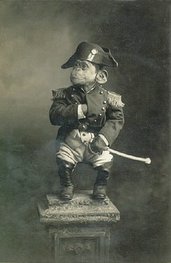
In the time of Australopithecines... I was still a monkey (a chimp I think, not a chump)...
"Robert! I don't care if you do think that you're related to Napoleon... Get your hand out of my blouse!"
Australopithecines are a genus of extinct hominids that lived in eastern Africa from about 4.2 Ma until about 1 Ma. Some anthropologists believe that some of the australopithecine species are directly ancestral to humans, however others hold they are a "side-branch" of the line that led to humans, and not direct human ancestors. I rather look like one those fellows, me thinks.
There are a variety of accepted taxonomic schemes for the australopithecines, however the four most commonly accepted species are Australopithecus afarensis, Australopithecus africanus, Australopithecus robustus, and Australopithecus boisei.
A. robustus and A. boisei are larger boned and more "robust" than A. afarensis & A. africanus, which are termed "gracile." The smaller gracile forms Australopithecus africanus and Australopithecus afarensis (the species which includes the famous fossil "Lucy") are typically thought to be the most closely related to humans. Studies have found that Australopithecus africanus (very similar to Australopithecus afarensis), the australopithecine species often thought to be the most closely related to humans, had a body shape more similar to modern apes than to members of the genus Homo.
Australopithecines stood about 1-1.5 m in height and had relatively small brains typically measuring between 370 and 515 cm3 (cc) -- only slightly larger than the brain of a chimpanzee.
The australopithecine mode of locomotion has been a point of controversy, usually centered around the shape of australopithecine pelvis and knee bones. Early studies believed the australopithecine pelvis was a clear-cut precursor to Homo with human-like bipedality, while later studies of australopithecine locomotion found it to be different from modern apes, but also very different from humans -- a distinct mode of locomotion. The most common consensus is that forms of australopithecines were adapted for both tree-climbing and at least semi-upright, if not fully upright walking, having a mode of locomotion different from all extant primates, including humans and modern apes."
"Cogito, ergo sum" I think, therefore I am?
And so it was...
I remember those days, like it was (well) yesterday...
Subscribe to:
Posts (Atom)
+framed+%26+cropped.jpg)

 Posts
Posts


